
Understanding Why Hair Loss Happens
Hair loss affects millions of men and women, and the causes range from genetics and hormonal changes to stress, nutritional deficiencies, and medical conditions. For men, androgenetic alopecia (male pattern baldness) is the most common cause, driven by the hormone DHT that gradually shrinks hair follicles. For women, hair thinning often results from hormonal shifts, thyroid conditions, or the cumulative effects of stress and aging.
Regardless of the cause, the earlier you address hair loss, the more effective treatment tends to be. Hair follicles that have recently miniaturized are more responsive to regenerative therapies than follicles that have been dormant for years. If you’re noticing increased shedding, a widening part, or thinning areas, now is the time to explore your options.
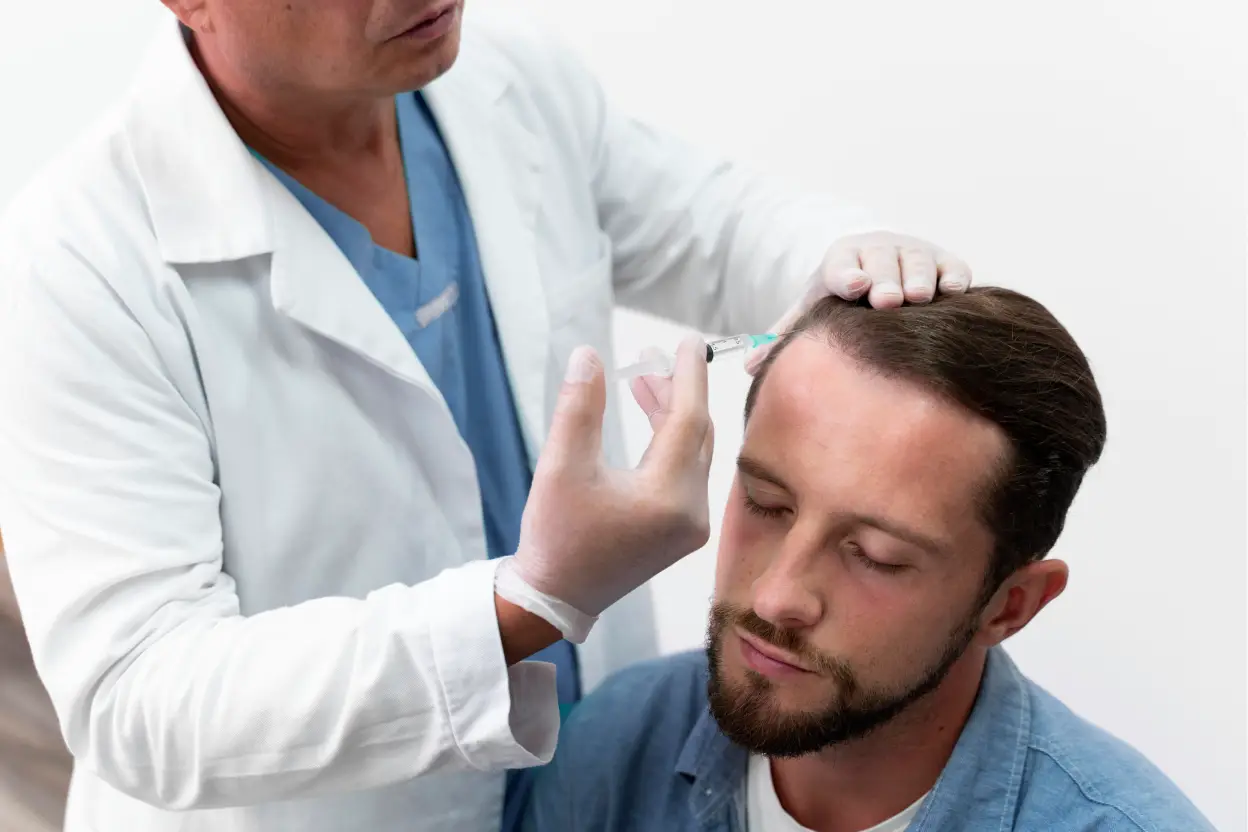
PRP Hair Restoration: How It Works
Platelet-rich plasma therapy is one of the most effective non-surgical treatments available for hair loss. PRP uses concentrated growth factors from your own blood to stimulate dormant hair follicles, promote new hair growth, and strengthen existing hair. The treatment involves a simple blood draw, centrifuge processing to isolate the platelet-rich plasma, and targeted injections into the areas of your scalp experiencing thinning.
PRP works by delivering growth factors directly to the hair follicle, triggering the body’s natural repair mechanisms. These growth factors promote increased blood flow to the follicles, stimulate the proliferation of dermal papilla cells (the cells responsible for hair growth), and extend the active growth phase of the hair cycle. The result is thicker, stronger, more resilient hair growth over the course of several months.
What to Expect During Treatment
A PRP hair restoration session at Avellina Aesthetics typically takes about 60 minutes. After a blood draw and centrifuge preparation, Dr. Berdichevskaya injects the concentrated PRP into the targeted areas of your scalp using fine needles. Most patients describe the discomfort as mild, especially when a topical anesthetic is applied beforehand.
Results are not immediate — hair growth is a gradual process. Most patients begin to notice decreased shedding within the first month, with visible new growth becoming apparent after two to three sessions. A typical treatment protocol involves three to four sessions spaced four to six weeks apart, followed by maintenance sessions every six to twelve months.
Why Choose a Physician-Led Hair Loss Clinic
Hair loss has multiple potential causes, and the most effective treatment depends on an accurate assessment of what’s driving your specific pattern of thinning. At Avellina Aesthetics, Dr. Berdichevskaya evaluates your hair loss as a medical professional — considering your health history, hormonal factors, and the characteristics of your hair loss pattern before recommending a treatment plan.
This clinical approach matters. PRP is highly effective for the right candidates, but it’s not appropriate for every type of hair loss. A physician who can distinguish between treatable patterns and those that require different approaches ensures you’re investing in a treatment that will actually work for you.
Ready to Book Your Consultation?
If you’re ready to explore your options or have questions about which treatment is right for you, contact Avellina Aesthetics to schedule a consultation with Dr. Violetta Berdichevskaya. Call us at (215) 722-6022 or visit avellinaaesthetics.com to get started.
Frequently Asked Questions
PRP hair restoration is one of the most effective non-surgical options for male pattern baldness, particularly when started early. It stimulates dormant follicles and strengthens existing hair.
PRP has shown significant efficacy in clinical studies for patients with early to moderate hair loss. Results vary by individual, but most patients see measurable improvement in hair density and thickness.
Decreased shedding within weeks, followed by visible new growth over two to four months. Optimal results typically require multiple sessions and ongoing maintenance.